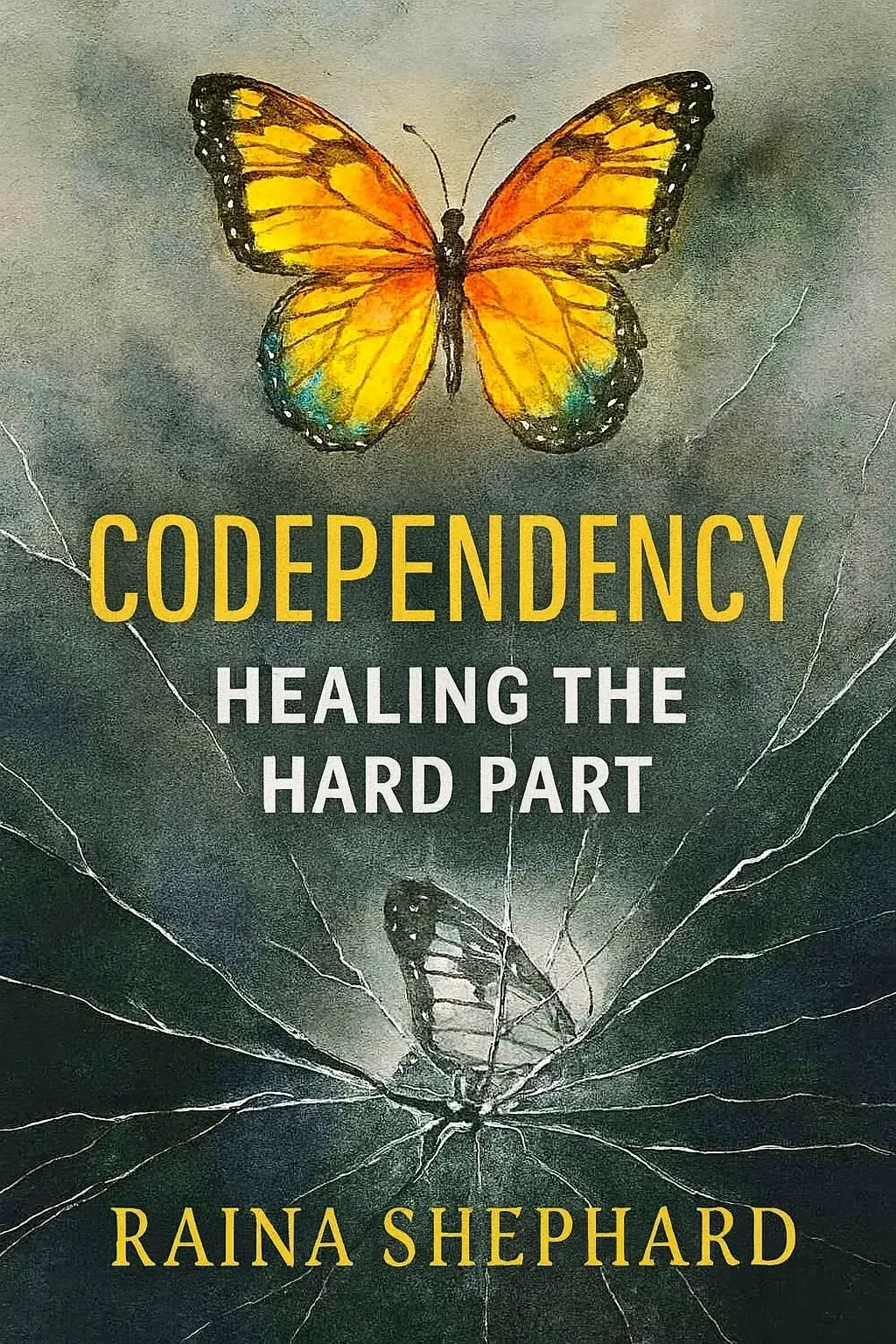
When Helping Hurts: 10 Signs It’s Not Love, It’s Codependency
How to love people without losing yourself.
You want to be kind. You want to be there. But if “being there” keeps costing you your peace, your sleep, your money, and your sanity—and the other person isn’t growing—your help may be hurting.
As a therapist and a mom who has walked through storms, I’ve learned this: love heals, but rescue can quietly destroy. Below is a simple, compassionate guide to spot the difference—and practice healthier ways to care.
What We Mean by “codependency” (in Plain Words)
Codependency is when your sense of worth, safety, or identity becomes overly tied to another person’s moods, choices, or needs. You start managing, fixing, smoothing, rescuing, and you call it “love.” But it often enables the problem to continue—and leaves you depleted.
Love tells the truth and keeps its word. “Let your ‘Yes’ be yes and your ‘No,’ no.” (Matthew 5:37)
10 Signs Helping Has Turned Into Hurting
1) You solve problems the other person created.
You call the teacher, pay the fine, make the excuses, redo their work.
Try instead: “I care about you. I’m confident you can handle the consequences. I’m here to support healthy choices.”
2) You’re anxious unless they’re okay.
Your peace rises and falls with their texts, tone, or relapse.
Try instead: Notice the urge to check. Breathe. Pray. Choose one grounding action (walk, journal, call a safe friend) before responding.
3) You say “yes” when your body says “no.”
You feel the tight chest, clenched jaw—then agree anyway.
Try instead: “I need to think/pray about this and get back to you.” (Then actually get back with a clear yes/no.)
4) You carry secrets that keep the cycle going.
You cover for them at work, church, or school.
Try instead: Protect safety and truth. “I won’t lie to protect choices that harm you.”
5) You mistake crisis for intimacy.
The only time you feel close is when they’re melting down and you’re the hero.
Try instead: Build connection during non-crisis moments: walk, cook, laugh, pray. Real intimacy grows in calm.
6) Your time, money, and energy are consistently hijacked.
Emergencies keep outranking your health, goals, and relationships.
Try instead: Set a budget (time and money) for what you can give without resentment.
7) You coach, lecture, and arrange—but they don’t change.
You’re doing all the work; they’re doing all the deciding.
Try instead: Shift responsibility back. “I believe in your ability to figure this out.”
8) Boundaries feel mean.
You equate “no” with abandonment.
Try instead: Remember: boundaries define where love can stay. They are doors, not walls.
9) You feel persistent guilt or anger.
Resentment is a boundary alarm.
Try instead: Ask, “Where did I say yes to something I don’t own?” Repair with a new limit.
10) You confuse control with care.
You manage details to avoid your own fear.
Try instead: Grieve what you can’t control. Ask God for courage to hold your line and keep your heart soft.
A 60-Second Self-Check (Be Honest, Be Kind)
Mark yes or no:
- I feel responsible for fixing other people’s feelings or outcomes.
- I regularly ignore my body’s “no” to keep the peace.
- I carry secrets or make excuses to protect someone’s image.
- My mood depends on how they are doing.
- I’m often resentful after I help.
- I’m afraid they’ll leave or fail if I stop rescuing.
- I spend more time planning their life than living mine.
- I call love “loyalty,” but it mostly feels like fear.
- I’m exhausted and still feel like it’s not enough.
- I feel guilty when I take care of myself.
If you circled 3 or more “yes” answers: Your help may be drifting into codependency. Nothing is “wrong” with you. It means it’s time to reset how you love—truthfully, safely, and with dignity for both of you.
Boundary Scripts You Can Use Today
(Adjust names and details to your situation. Calm tone, short sentences, breathe.)
- To a loved one who wants money you can’t give:
“I’m not able to fund this. I can help you brainstorm options.” - To an adult child asking you to fix a deadline:
“I’m stepping back from school/work calls. You can handle this, and I’m cheering you on.” - To a partner who uses guilt:
“I love you. I won’t be spoken to that way. I’ll come back to the conversation when it’s respectful.” - To a friend who only reaches out in crisis:
“I care about you. I’m available Thursday at 4 for a call. If this is an emergency, please contact a hotline or local support.” - To someone pushing past your no:
“I’ve already answered. The answer is no.” - To a situation that needs a boundary + consequence:
“If [behavior] continues, I will [action]. I hope we don’t get there.”
Tip: A boundary without a consequence is a hope. A boundary with a consequence is a plan.
This Week’s Tiny Plan (7 Days, 10 Minutes Each)
Day 1 – Notice:
Write one sentence: “Where did I help in a way that cost me peace?”
Day 2 – Body cue:
List the physical signal your body gives when you’re overriding your “no.”
Day 3 – One script:
Choose one script above. Say it out loud to a mirror until it feels natural.
Day 4 – Support circle:
Text a safe friend: “I’m practicing new boundaries this week. Can I check in after a hard conversation?”
Day 5 – Replace rescue:
When the urge to fix hits, pause and choose one supportive alternative: listen, pray, reflect back, or name options.
Day 6 – Stewardship check:
Set a giving budget (time/money/energy) for this month.
Day 7 – Celebrate a win:
Note one moment you honored your boundary. Thank God for the strength.
Faith Note for Tender Hearts
Jesus’s love was fiercely compassionate and perfectly boundaried. He healed many; He didn’t heal everyone on demand. He said clear yeses and clear nos. Loving like Jesus includes truth, limits, and *mercy*—together.
If You’re in Danger
If someone’s behavior is violent, coercive, or threatening, your safety comes first. Contact local authorities, a domestic violence hotline, or a trusted professional immediately. Boundaries are not meant to be practiced alone in unsafe situations.
Prayer & Declaration
Prayer:
“Lord, teach me to love with wisdom. Give me courage to say yes when it’s mine to carry and no when it isn’t. Heal what fear has tangled. Protect the ones I love and show them the next right step. Amen.”
Declaration:
“I can be compassionate and clear. My no is loving. My yes is honest. I release what isn’t mine and steward what is.”
Want a Ready-to-Use Tool?
I can generate a one-page Boundaries Script Sheet (PDF) that summarizes the scripts above for your fridge or phone. Just say, “Make the script sheet,” and I’ll produce a printable version immediately.
© Raina Shephard. You’re welcome to share this article with credit and a link back to rainashephard.com.
