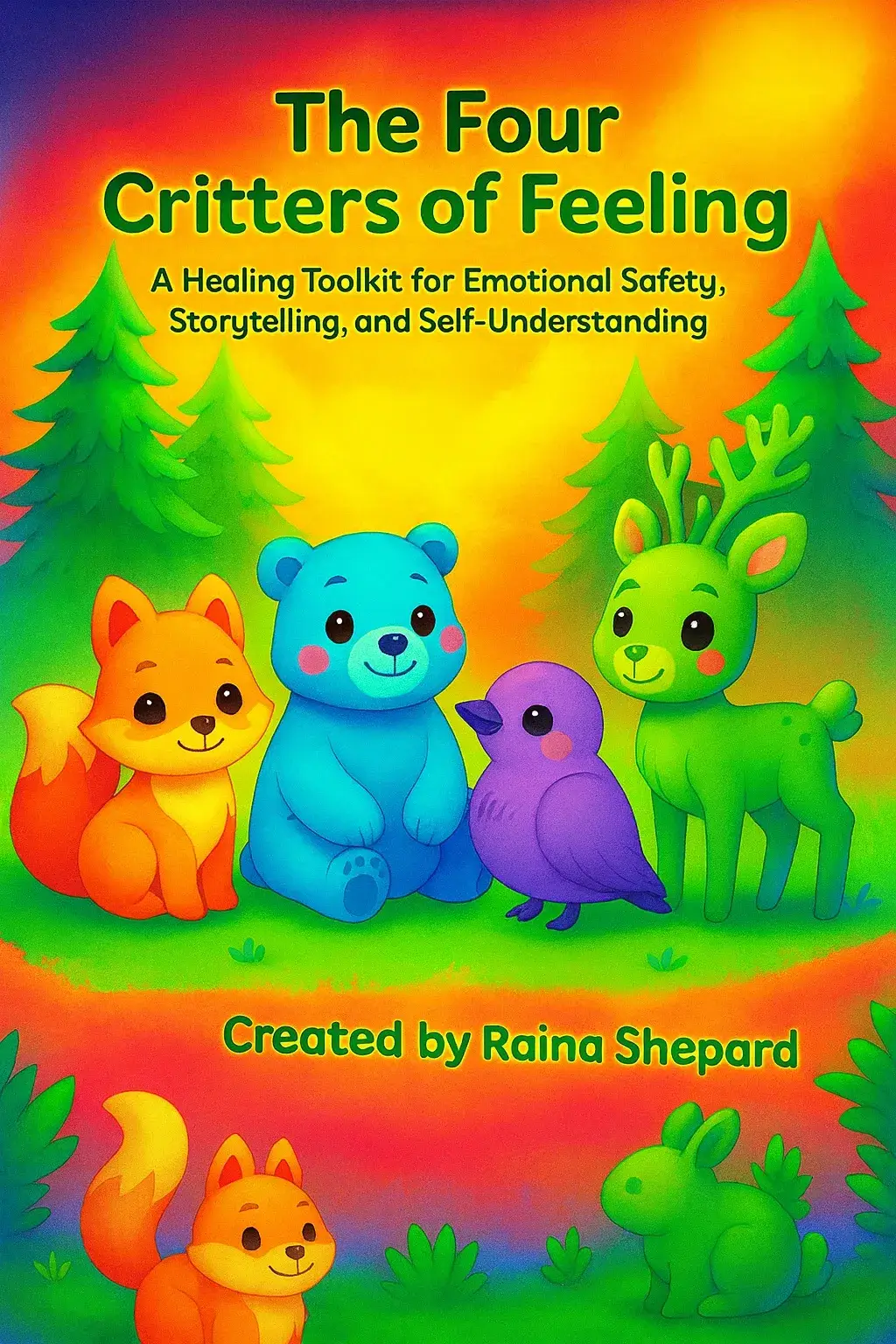
The Four Critters Of Feeling
More DetailsFor more book descriptions, upcoming releases, and updates.
Learning How Children Love
The Four Critters of Feelings
The Four Critters of Feelings are gentle, expressive companions created to help children understand, name, and safely express what they feel inside. Each critter represents a core emotional state that all children experience—sometimes quietly, sometimes loudly, and sometimes all at once. Together, the Four Critters teach children that feelings are not something to fear, hide, or fix, but something to listen to, care for, and understand.
Children often feel emotions in their bodies before they have words for them. A tight chest, wiggly legs, heavy shoulders, or a burst of energy can feel confusing or overwhelming. The Four Critters step into that gap between sensation and language. By giving emotions a friendly face and personality, children are able to say, “My critter feels this way,” which creates emotional safety, distance from shame, and an invitation to curiosity instead of fear.
Each critter has its own emotional role. One helps children recognize big, fiery feelings like anger, frustration, or excitement. Another represents heavy or tender emotions such as sadness, loneliness, or disappointment. A third helps children explore worried, scared, or unsure feelings that show up during change, separation, or uncertainty. The fourth embodies calm, comfort, and joy—those moments when a child feels safe, steady, and connected.
The critters do not judge feelings or rank them as good or bad. Instead, they model an important truth: all feelings have a purpose. Some feelings are messengers, letting us know something needs attention, protection, or rest. Others are signals of connection, safety, or happiness. When children learn that emotions come and go, just like their critters, they begin to trust themselves more and fear their feelings less.
The Four Critters are especially helpful for children who struggle to express emotions verbally, including young children, highly sensitive children, neurodivergent children, and those who have experienced stress, trauma, loss, or change. They provide a shared emotional language that parents, caregivers, teachers, and therapists can use to support healthy emotional development.
Rather than asking a child to explain how they feel—a task that can feel overwhelming—the critters invite play, imagination, and storytelling. Children can draw their critters, talk about where they live in the body, notice when one shows up, or imagine what each critter needs in that moment. This approach helps build emotional awareness, regulation skills, empathy, and self-compassion over time.
Most importantly, the Four Critters of Feelings teach children that they are not their emotions. Feelings may visit, but they do not define who a child is. By befriending their feelings instead of fighting them, children learn resilience, emotional confidence, and the deep reassurance that they are allowed to feel exactly what they feel—and still be safe, loved, and okay.
——Quotes
““Feelings don’t come to cause trouble. They come to tell us something.” “You are not your feelings. You are the one who listens to them.” “Every feeling has a critter, and every critter has a reason for being here.””
—Raina Shephard